
Transforming and Modernizing the
Beulah Water Works District Infrastructure
Many words and many interesting pictures follow!
Project Background and Need
In 2019, the Beulah Water Works District Board evaluated system vulnerabilities to improve resilience to climate change, particularly increasing drought conditions. The District identified three priority needs:
reduce water loss from an aging distribution system with leak rates of 35–40%
repair and protect the Middle Creek diversion structure vulnerable to flooding and freezing
develop an additional, reliable water supply for drought and emergency response.
With a design and engineering grant, the District retained RESPEC Engineering to develop solutions addressing all three needs.
Project Scope and Implementation
Distribution System Improvements
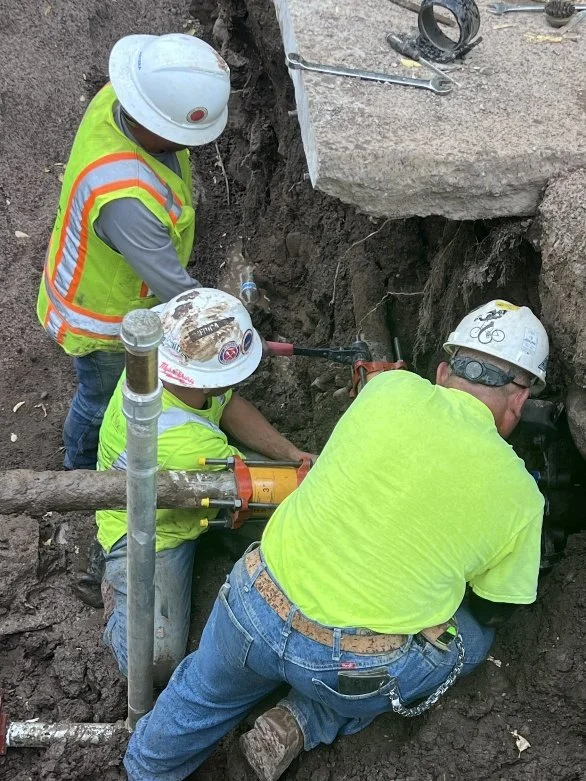
Approximately three-quarters of the District’s deteriorated water mains were replaced, along with installation of new meters and meter pits for all customers. These improvements significantly reduced water loss and improved system reliability. Despite delays caused by the 2024 Oak Ridge Fire and severe winter conditions, construction was completed in 2025. Pictures follow below!
Middle Creek Diversion Structure Repair
Repairs included a new reinforced concrete diversion structure, burial and protection of the diversion pipe, improvements to the reservoir mud valve, and construction of a new spillway. Flooding from post-fire storm events caused setbacks, but the project was completed in early summer 2025. Pictures follow below!
500,000-Gallon Raw Water Storage Tank
A 500,000-gallon raw water tank was constructed at the water treatment plant to improve drought resilience and fire-fighting capacity. The tank can be filled during periods of adequate streamflow and drawn upon during emergencies. This storage proved critical during the 2024 Oak Ridge Fire, when the District supplied approximately 500,000 gallons of water to the U.S. Forest Service. Training on tank operations was completed in January 2026, and a dedicated fire-fighting fill line is being added to support safer tanker operations. Pictures follow below!
Project Funding
The combined estimated cost of the three major infrastructure projects exceeded $8 million. All funding secured for these projects was restricted to capital improvements and provided in the form of grants or grant-equivalent funding, with no funds used for District operations or maintenance. As a result, the District was able to complete these projects without expending its own operating or reserve funds.
Funding sources included:
American Rescue Plan Act (ARPA) funds administered by Pueblo County, totaling $5.2 million, applied across all three capital projects.
Colorado State Revolving Fund (SRF) financing through the Division of Water Resources, totaling $1 million for the Distribution System Improvement Project. This funding included 80% loan forgiveness, with the remaining $200,000 financed at a very low interest rate, making it functionally grant-equivalent.
Energy Impact Assistance Fund (EIAF) grants totaling $1.75 million, supporting both the Distribution System Improvements and the Raw Water Storage Tank. Required matching funds were fully satisfied using ARPA grant allocations.
Emergency Response: Infiltration Gallery
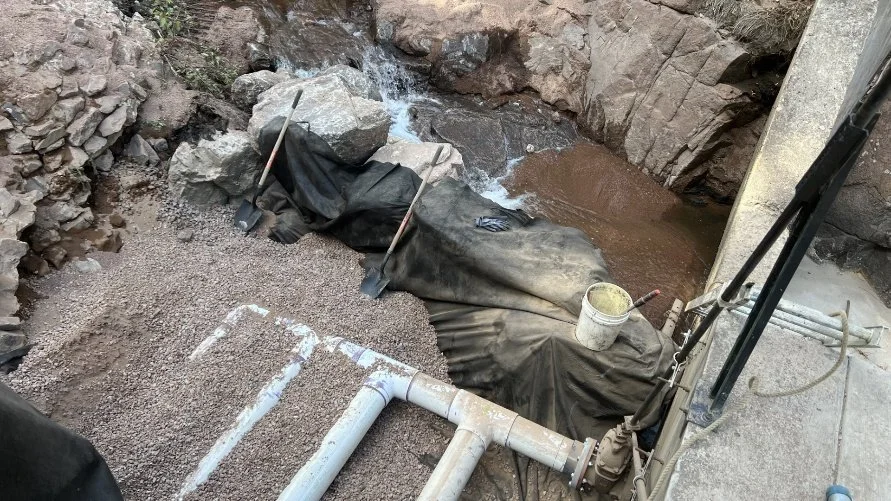
Following the Oak Ridge Fire, which burned approximately 1,000 acres of the District’s watershed, ash, sediment, and debris severely impacted the intake system. Subsequent flooding filled the reservoir with sand, creating an untenable operational situation. To restore reliable supply, the District constructed an emergency infiltration gallery within a side bay of the reservoir. With assistance from Miller Pipeline, the system was designed and installed in four days and has performed exceptionally well. The District is currently working with USDA to secure emergency grant funding to cover this project.
Pictures from the work in 2025
Laying the pipelines
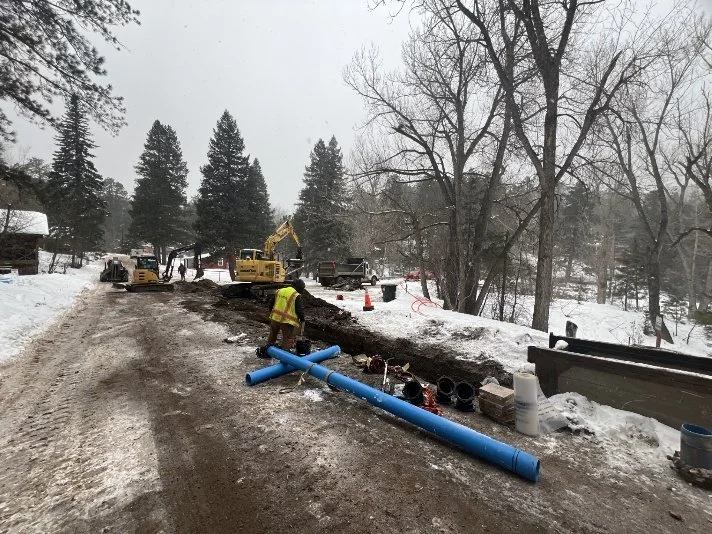
Laying new pipe in Beulah despite the frozen ground
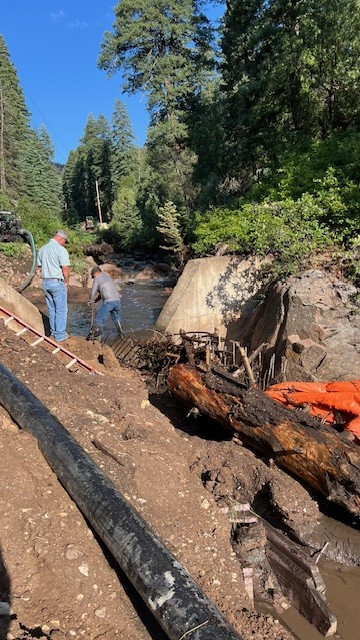
Work on Middle Creek diversion structure diverting the entire creek to below the construction site
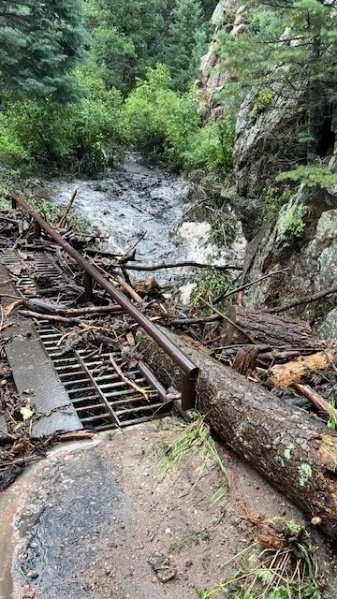
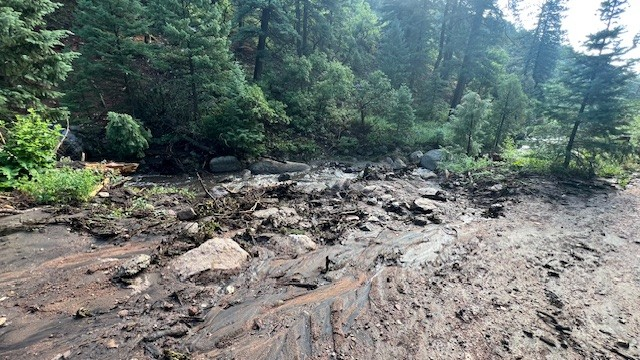
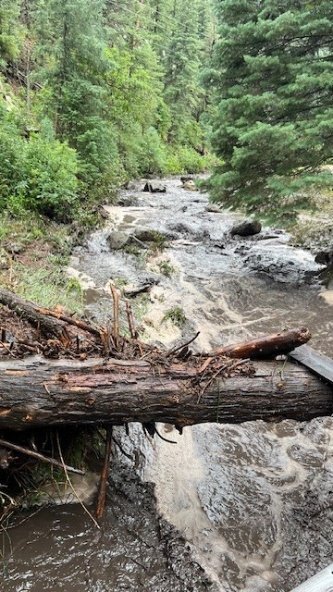
Damage to Middle Creek streambed after major storm event
Sand damage to reservoir
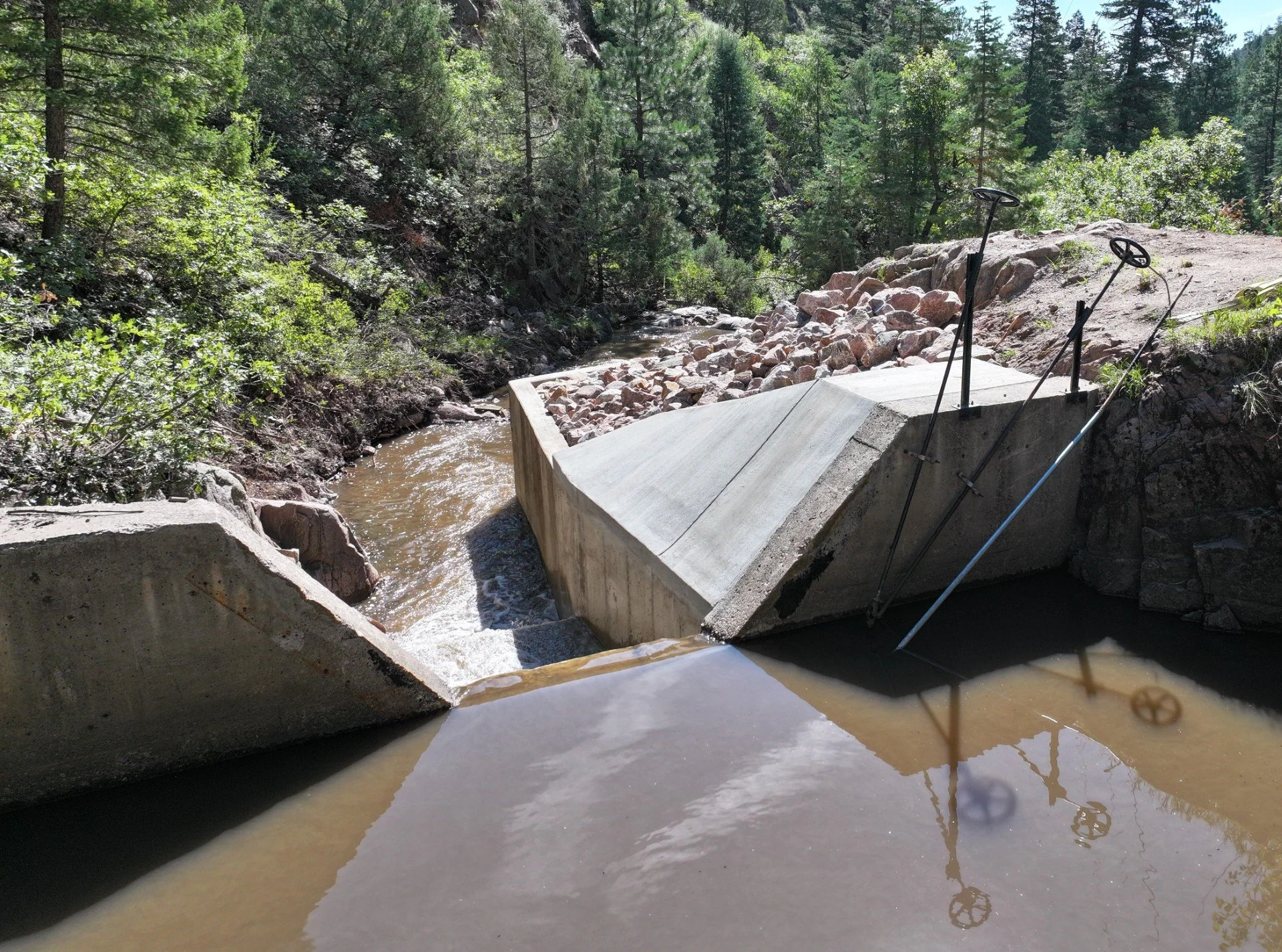
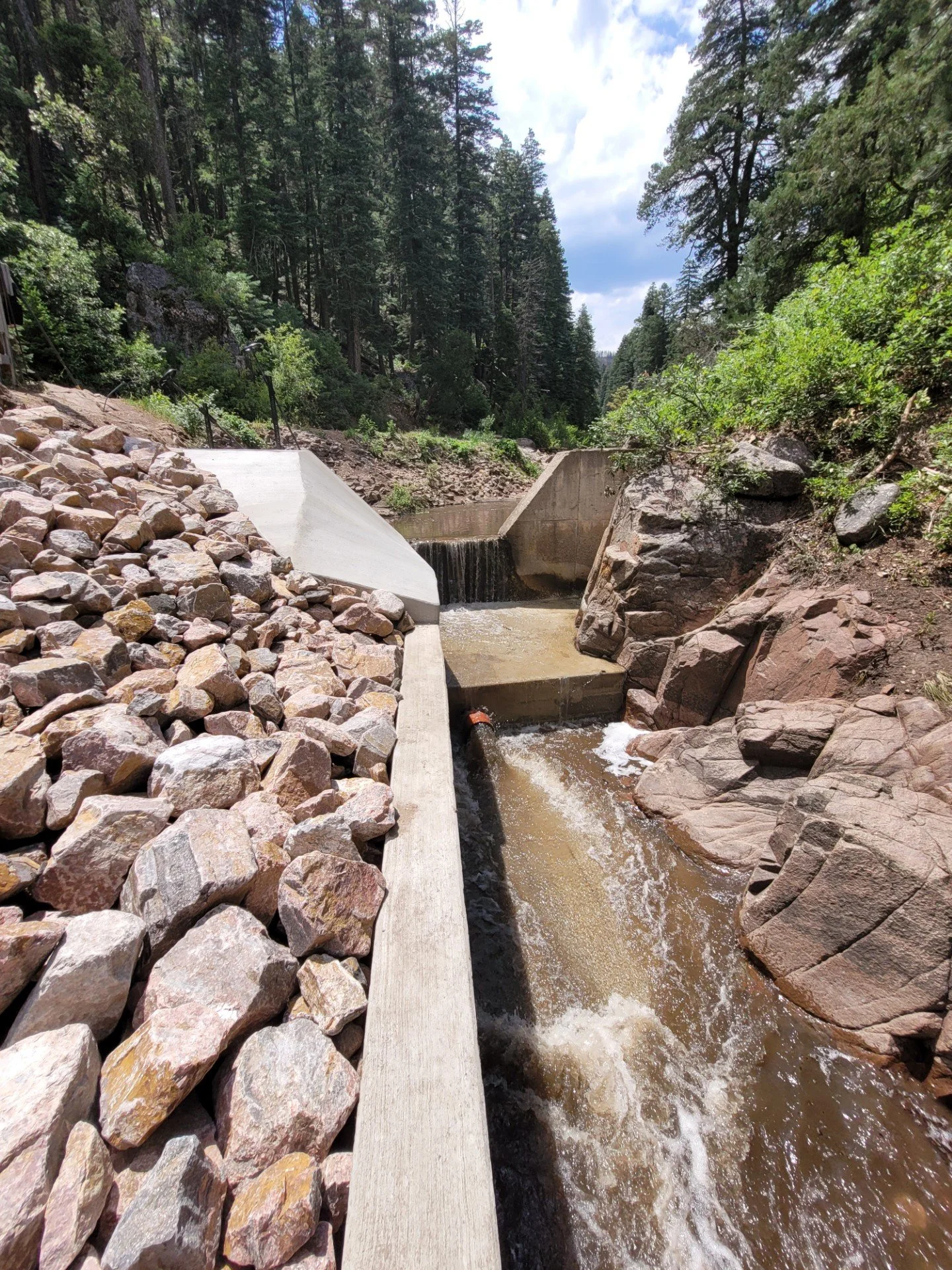
View 1 of the restored diversion
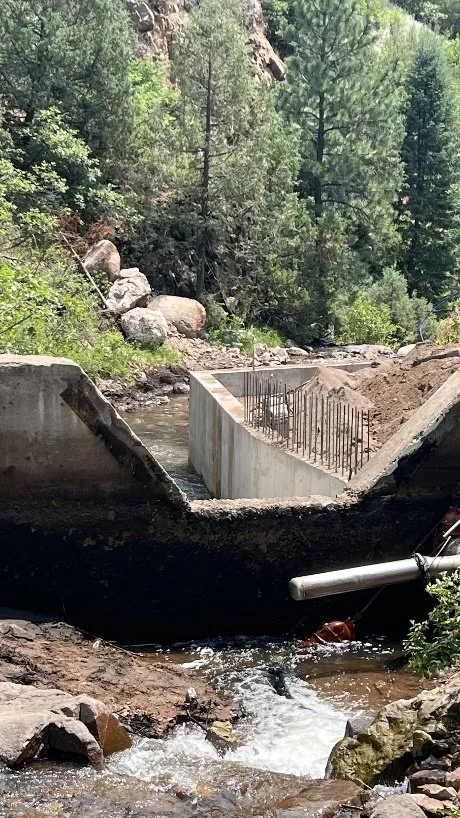
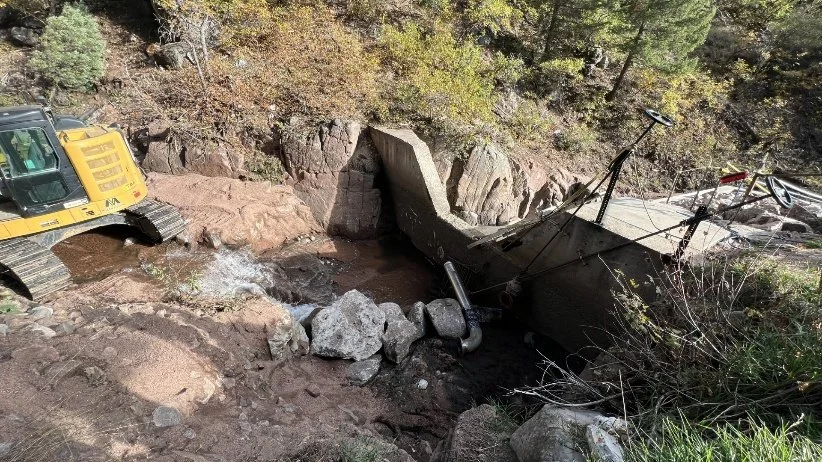
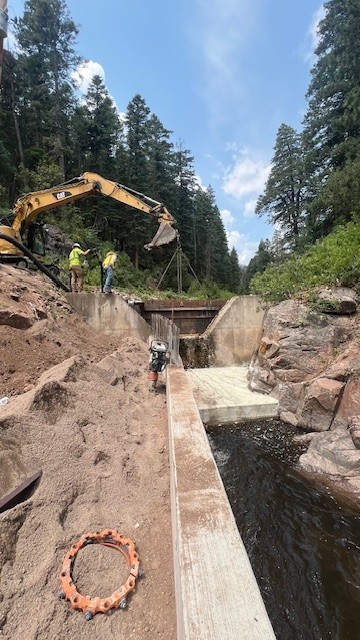
More work on Middle Creek diversion structure repair with heavy equipment … to the right, a view when it was nearly completed.
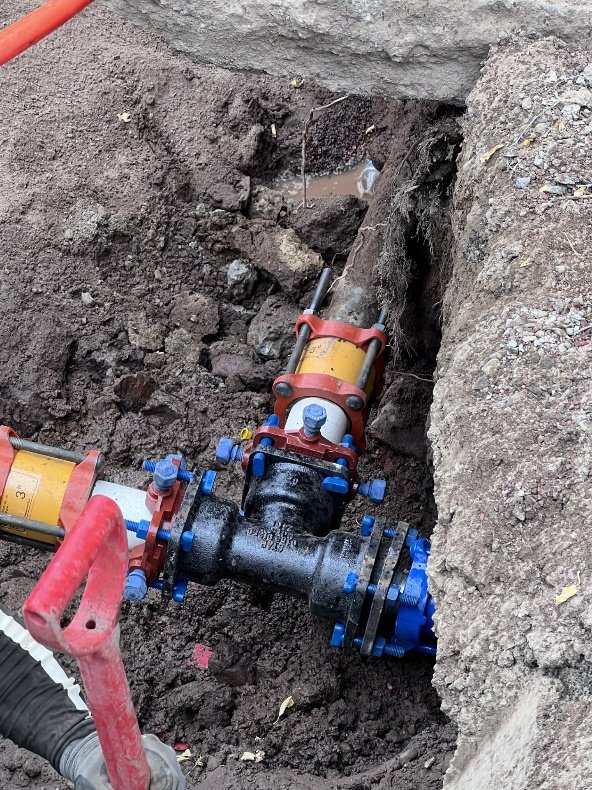
Working below ground on a valved juncture in the new pipeline
Middle Creek Diversion Structure Repair
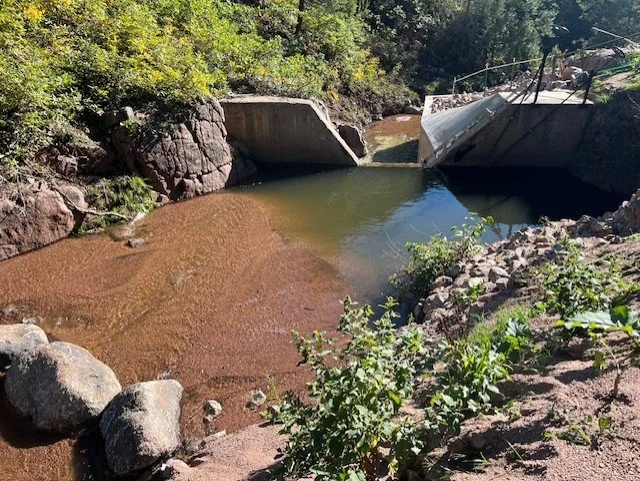
Construction resumed in Spring 2025 following snowmelt. Work included construction of a new reinforced concrete diversion structure below the weir, burial and protection of the diversion pipeline with concrete and riprap, improvements to the mud valve at the base of the small reservoir, and construction of a new spillway. Construction faced many challenges, including that after commencing work, another storm wiped out early efforts!
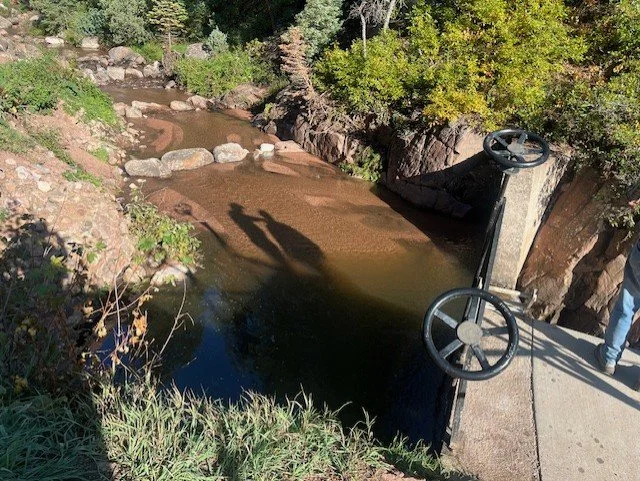
Sand damage near intake
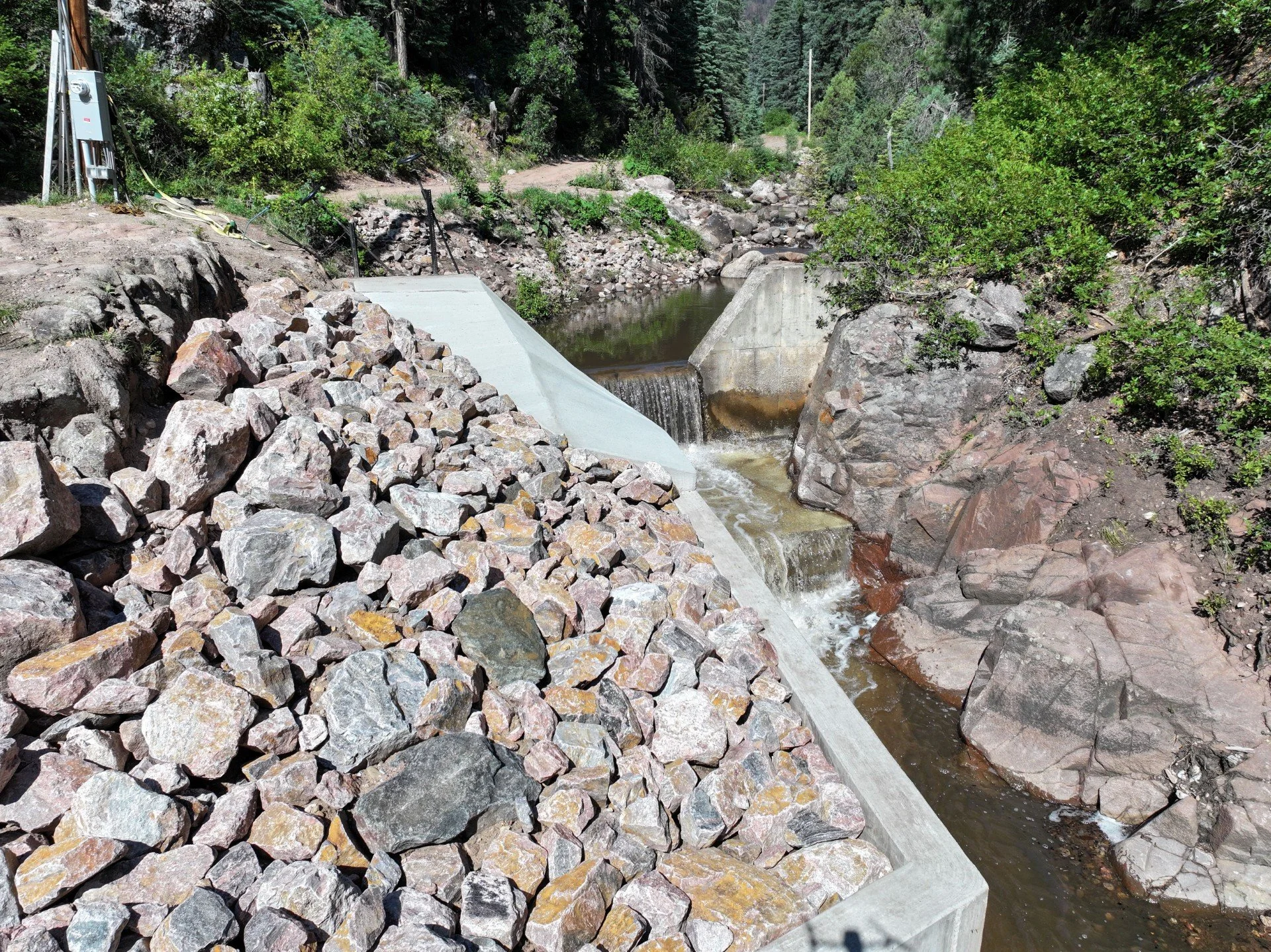
View 2 of the restored diversion
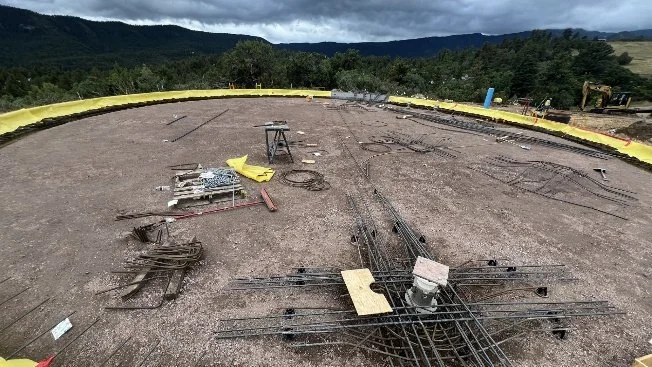
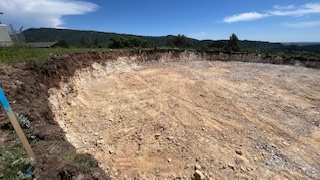
A view of the cleared ground for the tank foundation
Major Storm Event
Following the Oak Ridge Fire, which burned approximately 1,000 acres of the District’s watershed, the District faced severe operational challenges at its intake filter structure. Ash, silt, and fire debris required extraordinary efforts by the plant manager and Board members—often involving multiple daily trips to the diversion site in hazardous conditions—to manually clear intake screens and maintain water supply. During construction, a major storm event dropped approximately seven inches of rain on the burned watershed, triggering severe flooding that damaged completed work, transported fire debris, ash, and sediment downstream, and clogged multiple bridges. Miller Pipeline again assisted the District with emergency cleanup using heavy equipment and the diversion repair project was completed in early summer 2025.
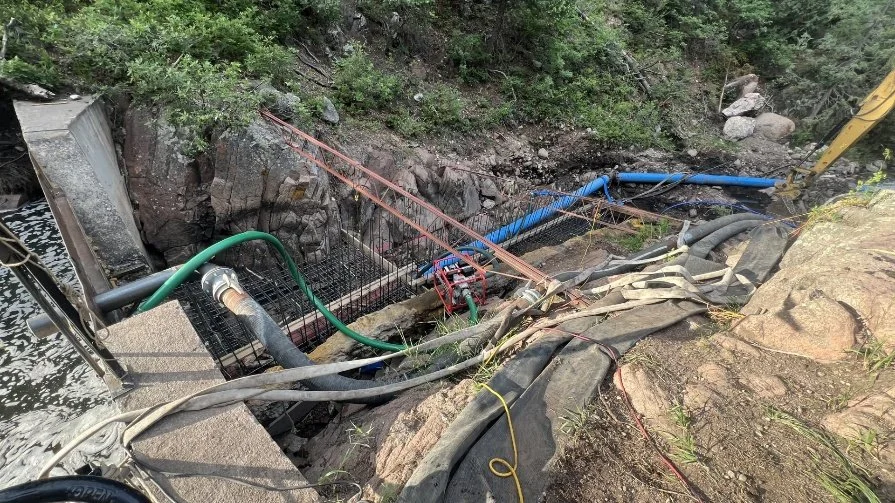
Infiltration gallery under construction in a side bay of our reservoir showing the new intake pipes
The proud construction crew at completion
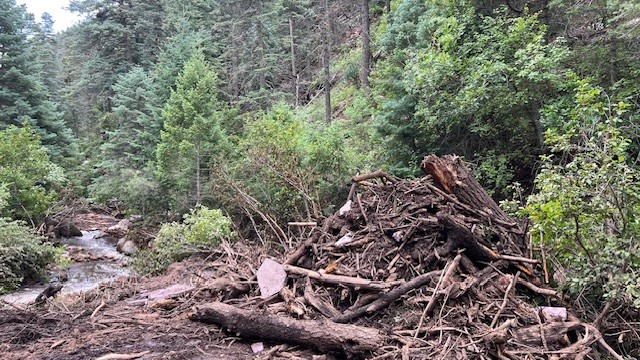
Damage to Middle Creek streambed after major storm event. There’s a bridge under that pile of trees!
Flood Damage, but then the Completed Diversion!
The sand washdown threatened our water supply on a daily basis! The completed Diversion retaining wall with large fill rock , redesigned and raised "floor" with an extended and open "mud valve", in conjuction with a new infiltration gallery saved the day!
The new tank rises, top constructed first, then each subsequent layer added by jacking up the completed segments and assembling the next rank beneath.
Damage to Middle Creek intake and reservoir after major storm event
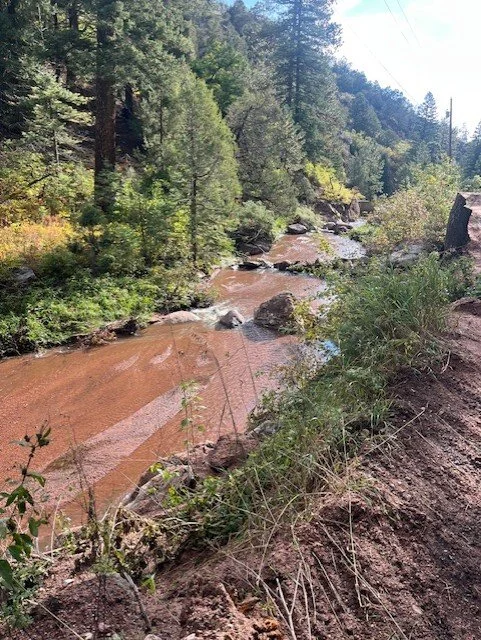
Sand filling in creek
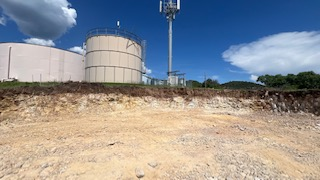
The site cleared for the new raw water tank with the older raw water tank and processed water tank in the background, along with a telecommunications tower
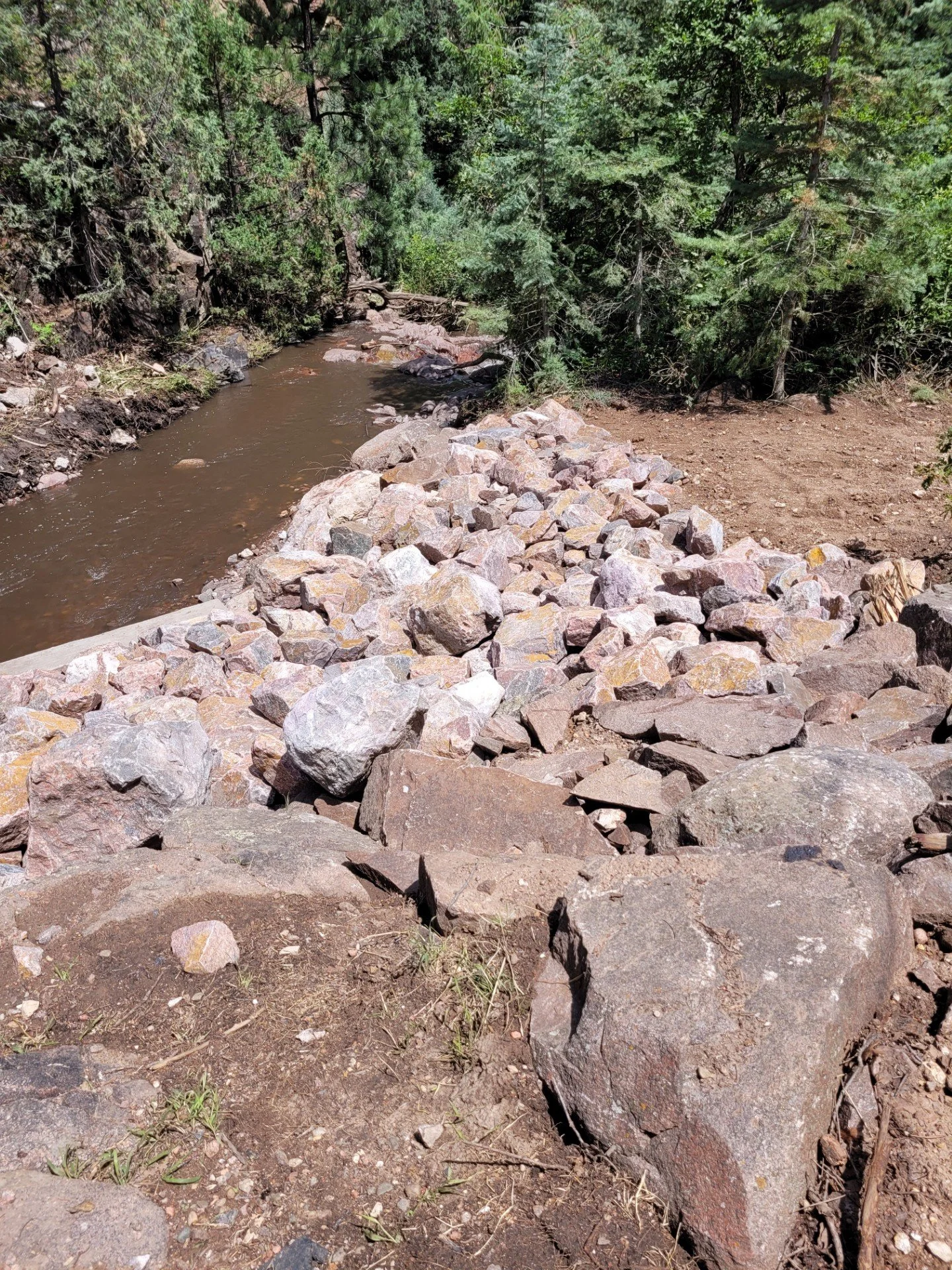
View 3 of the restored diversion
Working on the diversion
500,000-Gallon Raw Water Storage Tank
The raw water storage tank—now visible as the green tank at the water treatment plant—required extensive site preparation. Excavation involved weeks of work using a large trackhoe equipped with a rock-breaking tooth to establish a suitable foundation. Once excavation was complete, the concrete foundation and tank floor were constructed. Tank components were then delivered and assembled on-site by Tank Connection crews. Training for District staff and Board members on system operation and water flow management occurred in January 2026. In addition, Miller Pipeline is constructing a dedicated raw water fire-fighting fill line extending to the Methodist Church parking lot. This will provide a safer, less disruptive method for filling fire-fighting tanker trucks.
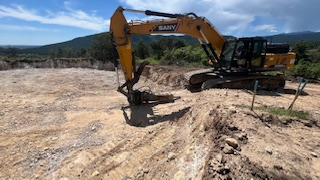
Breaking ground (and rock!) for tank foundation
Emergency Infiltration Gallery
As a result of the 2024 Oak Ridge fire and the 7 inches of rain in July, 2025 which filled our entire Middle Creek with sand as shown above, our “historic” water intake pipe clogged with sand! In order to transfer water from the creek to the plant, we had to change how we drew water from the Creek. We built an infiltration gallery in a bay of our reservoir, allowing the creek to continue to flow freely. The rock wall separating the gallery from the creek allows water to seep into the gravel bed fill around the horizontal slotted pipes. It’s working extremely well!
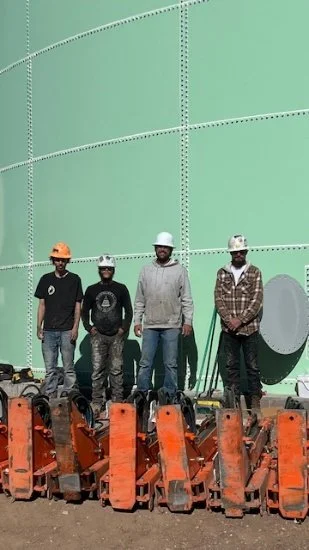
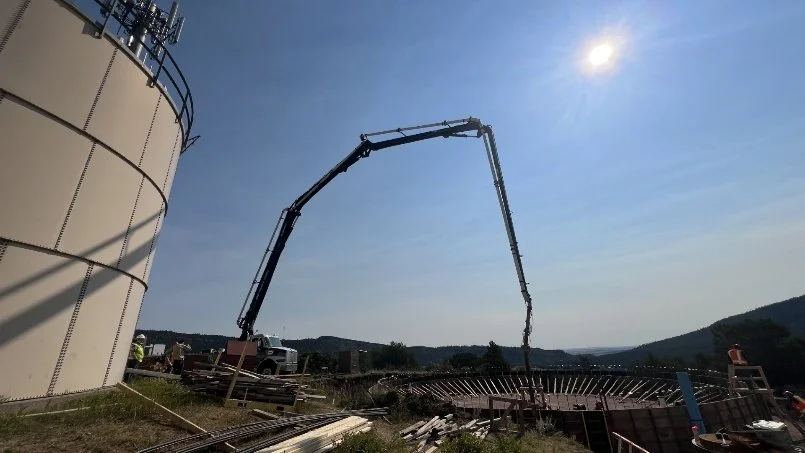
Pouring cement for the foundation of the new tank
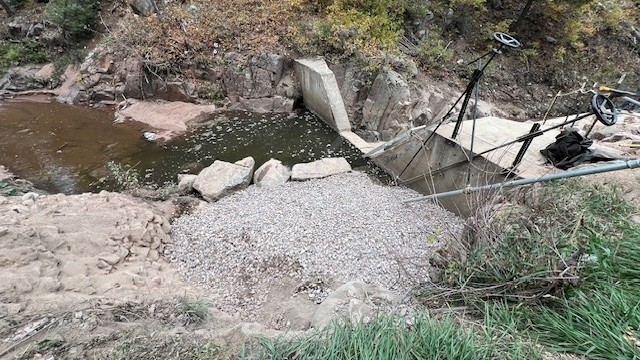
Completed infiltration gallery, pipes now covered
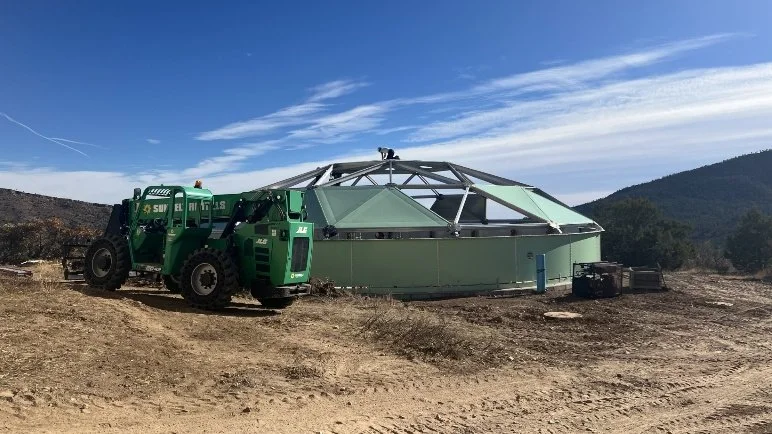
Construction of the new tank starts at the top and works down.
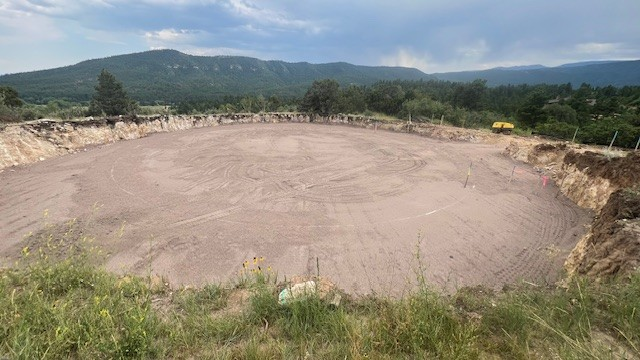
The fully cleared ground for the new tank
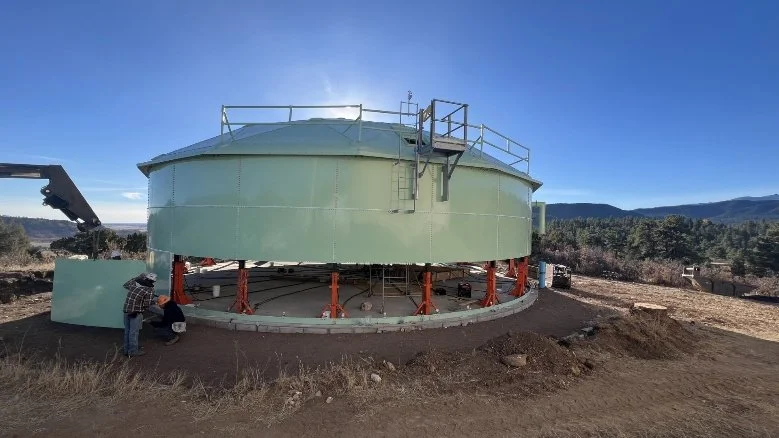
Construction begins at the base of the new tank